Blacksmith Shop & Woodworking Area
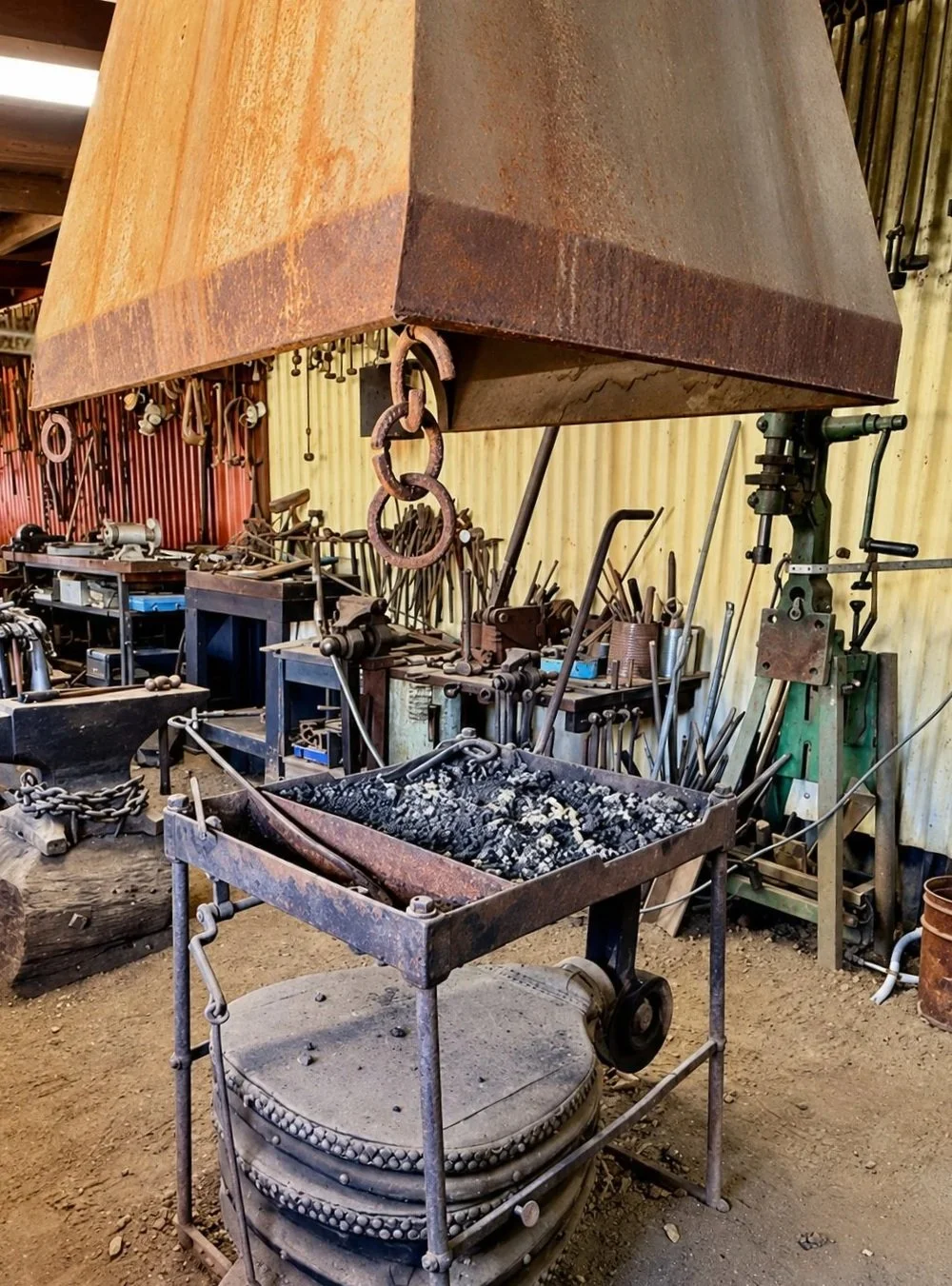
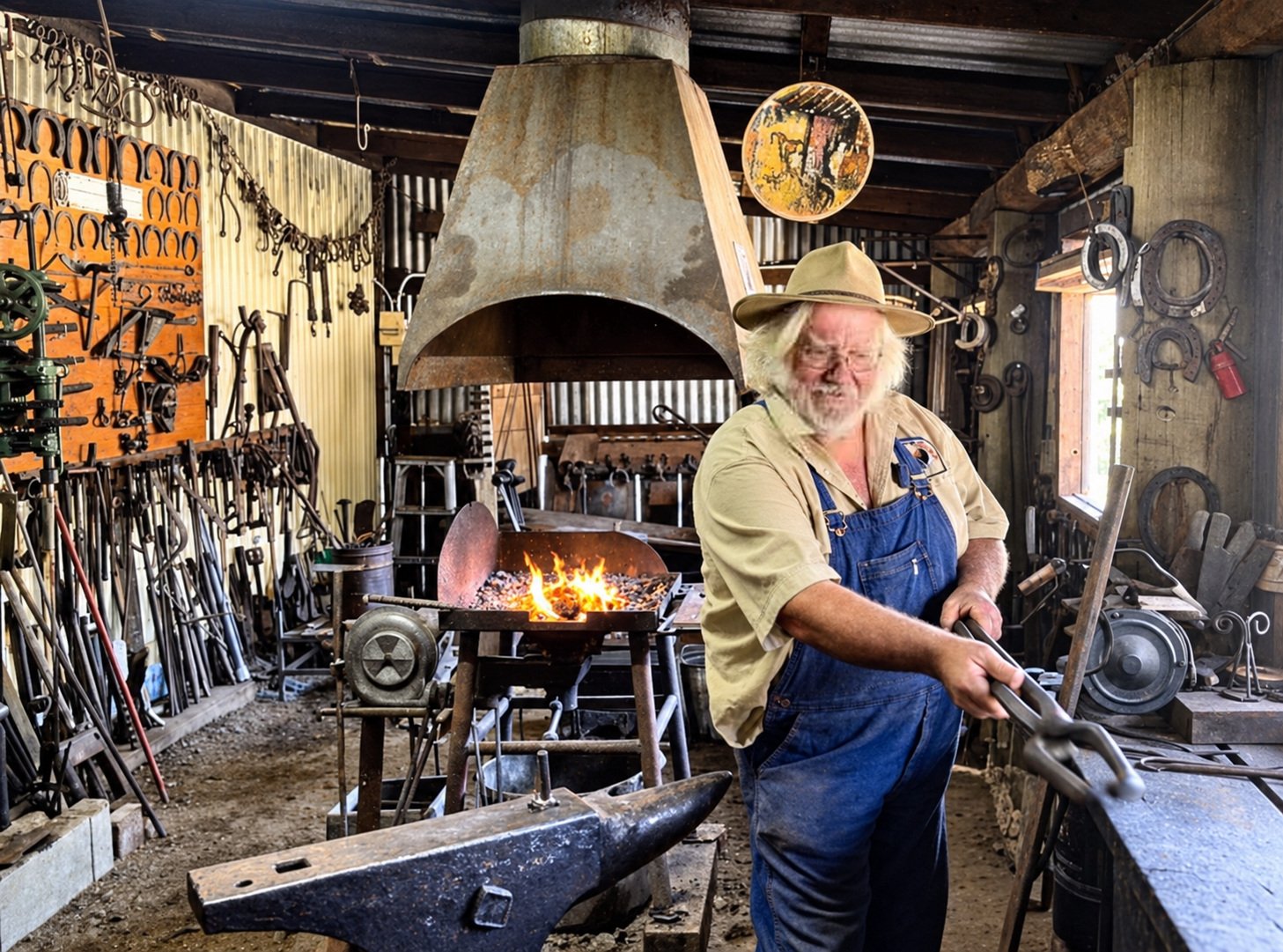
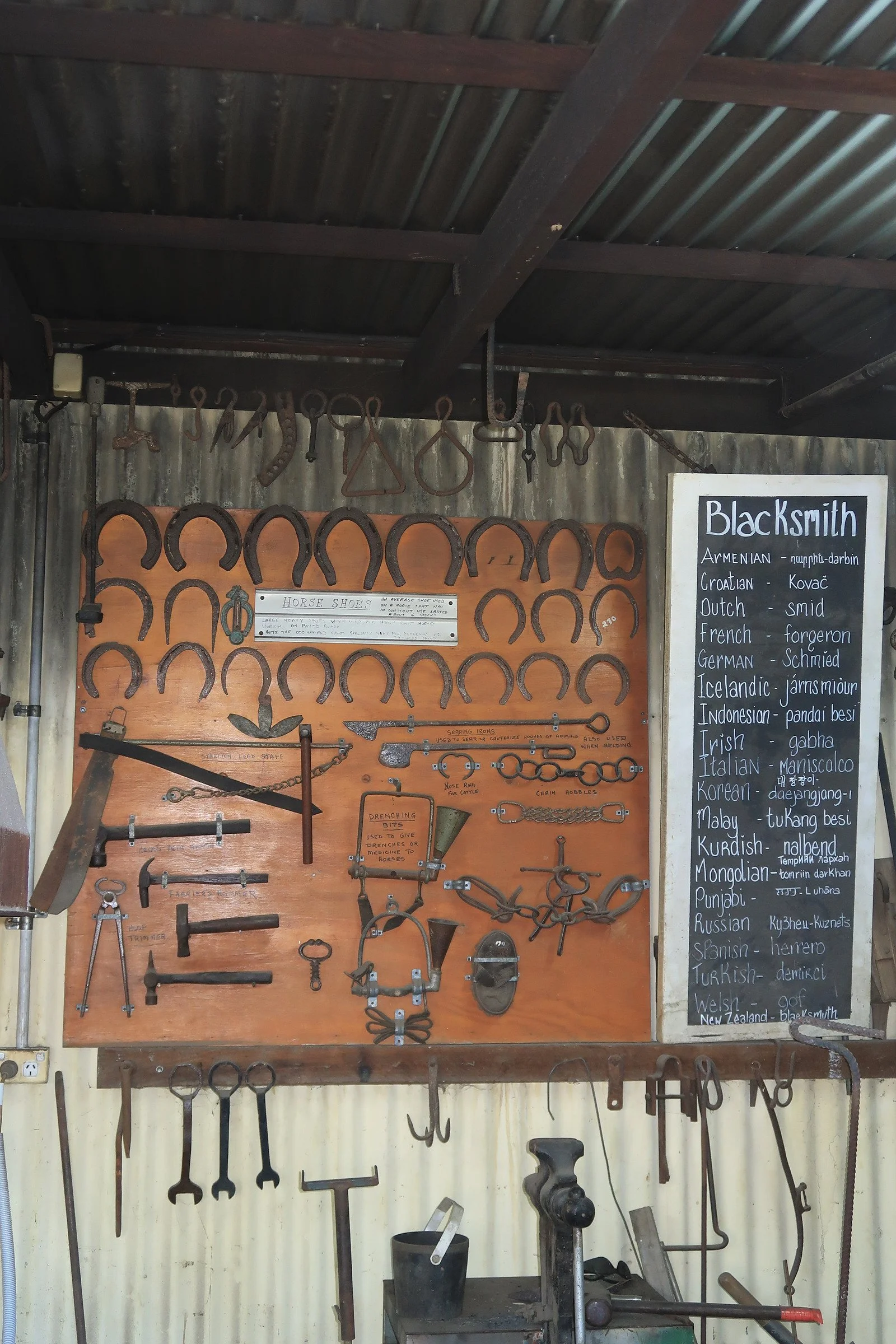
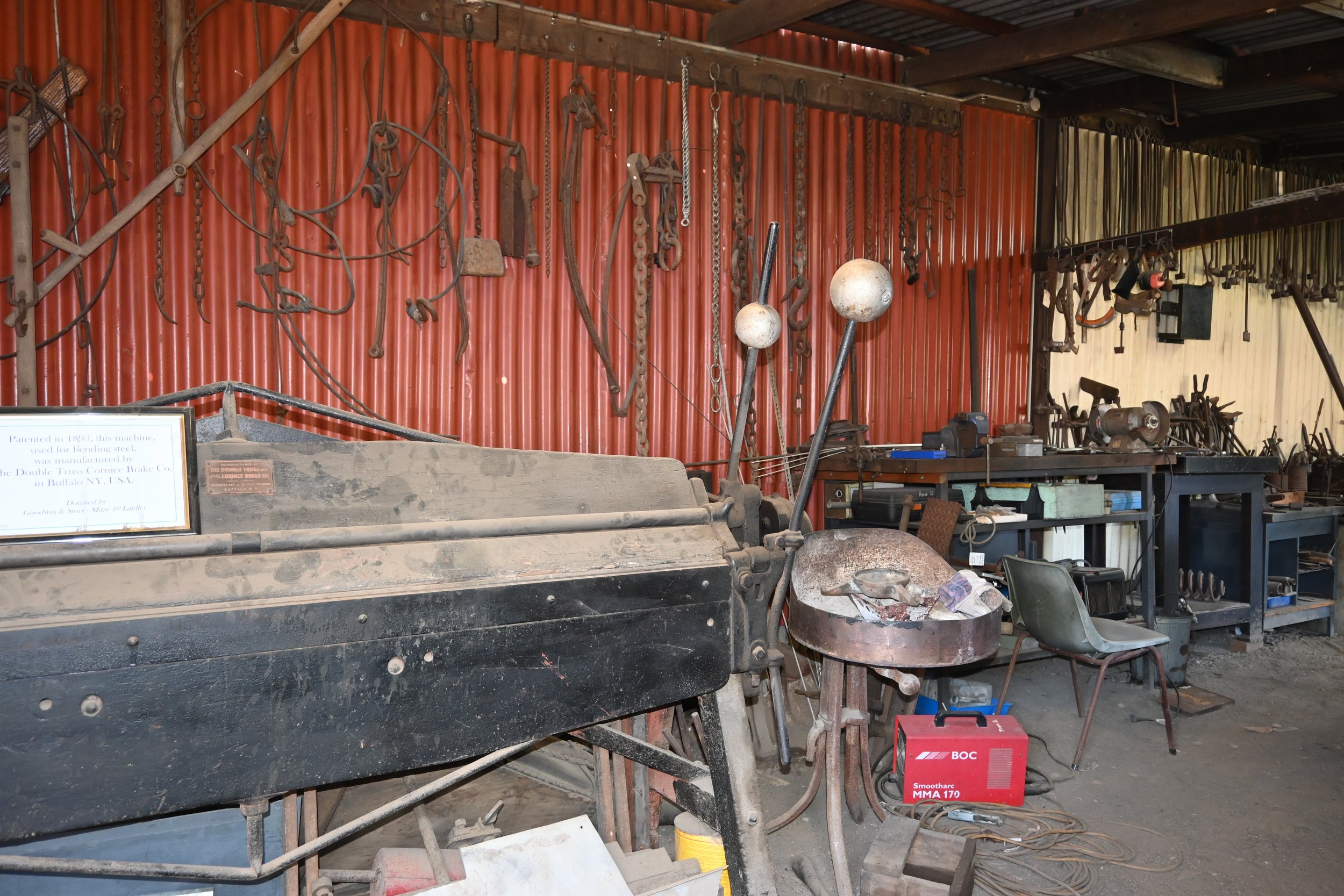
The village smithy, with its forge and tools, and the woodworking shop with treadle and flywheel lathes.
The village smithy was the go-to craftsman for shoeing horses and making essential metal tools — shovels, picks, ploughs, nails and other farm implements, anything that needed strength and durability. Using the forge, the blacksmith heated metal until it was malleable enough to be hammered, shaped and refined, supporting farmers, tradespeople and everyday life.
Volunteer blacksmiths still fire up the forge on some days. Demonstrations depend on volunteer availability and can be requested when booking a group visit.
In the Woodworking Shop you can see the art of woodturning as it was practised in the past. The treadle lathe allowed craftsmen to work independently, using a foot-powered treadle to control the rotation of the wood. Later advances such as the Great Wheel and flywheel lathes introduced continuous motion, bringing greater speed, precision and consistency to everything from furniture legs to decorative pieces.
The forge inside the Blacksmith Shop.
More photographs